
Emmett was crooning again. That’s what he called it. His harmonica was squeaky and he wasn’t quite singing, but he loved a tradition. “It’s late at night, we’ve already been in a fight, shot Barty’s ass, bagged his old lass, and the day is all out of light.”
Clark chortled. Another tradition. Most of the sound was trapped in his round gut as it bounced with laughter, shaking the flimsy canvas tent that propped up his heavy, even rounder head.
Pat sneered, the edges of his mouth turning downward. Emmett was getting louder. Clark kept laughing. “That shit was ugly,” he muttered. “We’re gettin’ sloppy. Not smooth. And you didn’t bag nobody’s lass.”
Emmett sang on, his bursts on the harmonica getting punchier. “Busted into the inn, used our plan, found our man, and now he’s dead as a clam.”
Clark roared.
Pat’s frown drooped further towards his chin.
Emmett squatted next to Clark by the tent. Pat stood across the low fire from the pair, re-buckling each of his saddlebags.
Emmett began, “Don’t get so hot, big shot. Clam down. We did our job.”
“We did an ugly job,” said Pat.
“Well, Now’s the easy bit. Let the fire burn tonight. The sheriff might come after us in the morning. He thinks he knows we’re here. Get him headed this way, ride back past the town when we see him coming. Leave him in the dust. Oldest trick in the book. Older than Clark’s lady friends,” said Emmett.
Pat smiled thinly and briefly, but not at the plan. Sometimes he couldn’t help it. But he was forcing it more and more often. “Fucking wiseass,” he thought. “What if we just headed out tonight?” he asked.
Emmett didn’t respond. Pat wondered if he listened anymore. Clark was still slumped against the tent, probably not worried about a thing. At least he had stopped laughing.
“It’s a high sky tonight. Lotsa stars. Should be a warm morning. Dry too,” Emmett said.
“Right again, boss,” responded Clark.
Pat looked straight ahead over the ridge. His eyes turned upwards and squinted at the stars, unsure. The sky above Acoma looked high. Just as high as the night before. Just as high as it looked in Fort Smith and Walton and Pueblo. He couldn’t tell the difference. He settled on, “If you say so, Emmett.”
Pat crawled through the flap of his tent and reached into the corner, under his pack. He didn’t have to reach far; he barely fit inside the tent. He slid out a brown envelope and three neatly folded pieces of cheap paper and began to read the letter from his brother again. He thought about the offer: a farm back home in Dalton, in northwest Georgia, a house with his brother, a chance to face his family again. Only a three-day ride from where he sat. The income would be tenuous. Working with Emmett and Clark paid well and paid regularly. It was hard to imagine leaving those two. Not that he hadn’t. He had, and often. He couldn’t leave just yet. Maybe when he had something sizeable saved up. Maybe in a year.
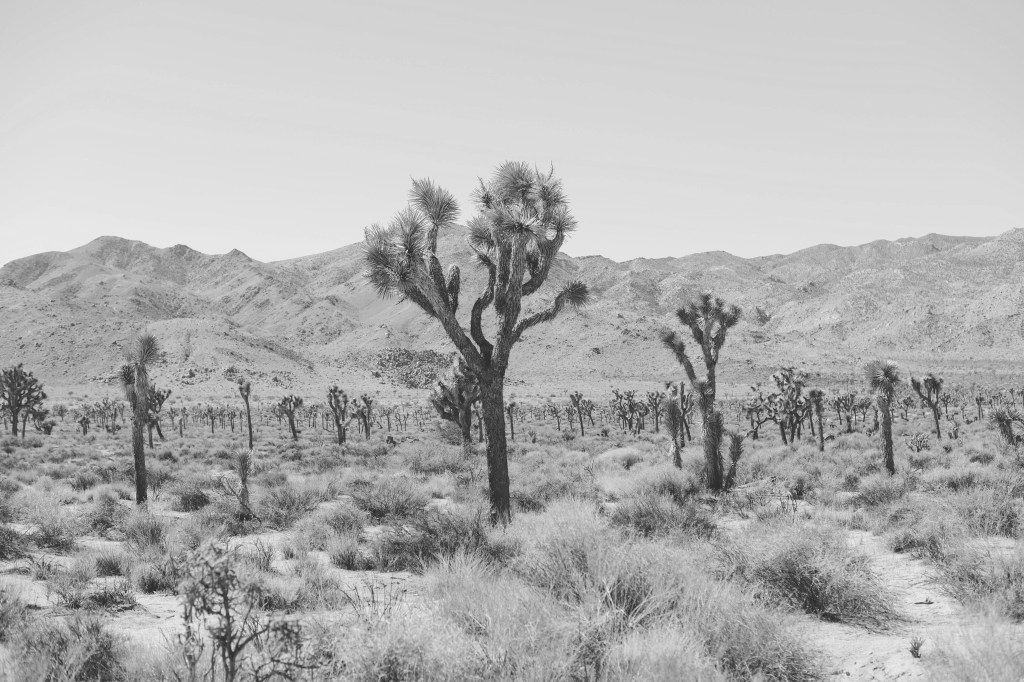
He sat down outside his tent and returned to gazing over the ridge. Acoma wasn’t one of the cozy little circles of homey light that they put in the Eastern papers. Pat saw a thin line in the dust, a flat, painted interruption of the plain not fit for even a night’s sleep. It wasn’t life in the boomtowns further west or the bigger settlements in Texas or Missouri. There was no nightlife, only a few shops, and inn, a tavern, a post office, and a three-cell jail. So they slept on the ridge.
“We can’t be touched,” Emmett had barked as they rode out of the town just a few hours earlier to the ridge. “We’re known. We are feared. Just like my beard. The law never interferes.”
“Quit rhyming now, please.” Pat wondered if they were too known after what they did to Willy.
“I’m too tired, Emmett,” was Clark’s only protest. “Let’s find a few beds.”
“Best bed we’ve had in months was in Joplin. Big payday, a night with that girl missing all those fingers, and a soft bed. You’ve been gripin’ ever since, Patty.”
“That’s where you bought that damn harmonica. And those books. Nothing but trouble since. We’re not gettin’ paid enough and we’re in some mean parts. Willy was an easy one. Jody, Billy, they were some fighters. Sam took three shots before we could be sure we were done.”
Emmett shrugged. “I’m gonna turn this thing around for us real soon. Don’t you boys worry.”
Clark patted his belly. “Amen, boss. One job at a time.”
Pat looked down at his hard leather boots and chewed his lip. “Well, I’ll ready for that when you are, Emmett.”
He read the letter again before falling asleep. It wasn’t the right time. Maybe after a few more jobs. Maybe in a month or two.
…
The Sun rose early and it rose hot. Pat knew that Emmett had been right. He scratched his head as he stood up from his mat.
Emmett was singing already. Pat couldn’t be sure if it was the light, the heat, or the singing that woke him. It was usually the singing. Or the damn harmonica.
“Hey, today is oh so hot, but we’re after a better lot, want to make it to the top, so we make our guns go “Pop.”
Emmett hadn’t been right often. Sunrise and sunset looked the same from the ridge. The Sun simply moved in a different direction. It was all dark reds and browns as the red New Mexican rock lit up. Acoma still looked flat and thin. It was uglier in the morning without its lights on. He squinted again, this time at the town, then at the plain behind it. This wasn’t the scene he had imagined two years ago. He wondered if it might be cooler on a farm. He could sit under a wide oak. Or he could go inside. It had to be cooler in a farmhouse than a tent.
He met Emmett and Clark at First Baptist in Vernon, two hundred miles east of Acoma. They all shopped at McDermott’s when in the town. Pat favored the stores hats, Emmett trusted the shopkeeper with his tailoring, and Clark bought his boots there. The shopkeeper knew them both well enough to know what Emmett did for a living and that Pat wanted something to do for a living, so he introduced them at a Sunday service. The saloon invited too many prying eyes. Church was an easy cover. The first job was from a deacon, anyway. He wanted the preacher’s job. Pat was just a lookout for that first time, and Emmett did the dirty work. It was a convenient relationship. It meant steady stream of jobs. After two years of chasing stagecoaches, Pat was in need of regular work. He wasn’t fond of preachers or anyone, really, so the work suited him.
…
Emmett and Clark woke late. A shrill flourish on the harmonica form Emmett signaled his rising, and a shout from Clark meant that he was up but not happy about it.
“Patty, you seen the sheriff and his boys yet?” shouted Emmett from behind the tent.
“Would I have let your lazy ass sleep if I had?” Pat answered.
“Huh, well you’re at it already then,” grumbled Emmett.
Clark grunted and rolled back to his pillow as Emmett threw open the flap. He had two small rectangular books in his hand, each with a dark blue cover. A Bible and a journal. He sat on the biggest rock near the fire, closed his eyes, and flipped through the Bible’s pages. When he opened his eyes, he began reading where his fingers rested. He read loudly and with gusto. Pat began to look for kindling for a new fire to cook breakfast. He walked away from the camp. When he was out of sight, he sat, red dust gathering on his pants and boots. He ran his hand through his overgrown black hair, imagining he had a mirror. Pat thought he might see the beginnings of a beard on his cheeks. He would look beaten, with dark eyes and lengthening wrinkles on his forehead barely hidden by the shadow cast down to his eyebrows by his hat. Even his hat was worn, having been turned a lighter shade of brown by the sun. He could still hear Emmett’s voice. He could remember when he would not have minded that voice, the reading, the singing. Things had worked at one point. Things might work better at the farm. Maybe he would stay for one more job. Maybe he would go home in a week.
…
Pat returned to the camp. He had gathered a few twigs, not enough to start the fire.
“You’re done with that, Emmett?”“Yep, got my fill of the good word for the morning. Stay and listen, Patty. We can talk about it.”
“It’s not for me. Clark’s your audience. Preach to him.”
“Not preaching, just reading. Leading, reading, greeting.”
“Sure.”
Emmett’s eyes lingered on Pat for a moment. “I’ll find the kindling, then. Keep watching the trail, Patty. We should have company soon.”
Pat sat, hunched, head resting on his right fist. He could handle vulgar Emmett, bragging and blowing on the harmonica all night after a job. He could handle pious Emmett, so devoted to his Bible in between jobs. But things were becoming more complicated. A year of this work. That was pressure. Pat felt it, Emmett felt it, even Clark felt it. Pat was feeling it more and more each time.
…
The Acoma job had felt risky. “Let’s pass this time,” Pat had suggested. “Slim fee, anyway, for a long trip.”
“No sir, we gotta stay sharp. We’re lazy. And we need cash now. Any way, any how. Need cash now.”
“It’d be good to have some money,” added Clark.
“I’m with you boys, but it’s against my better judgment,” Pat had conceded.
Emmett was pleased. “Hey! We got ‘em. Pack it up, we’re headed to Acoma,” he shouted at Clark. “In-n-out no problem. This Willy’s a drunk anyway. Find the bar, sweet talk him back to the motel, finish him off, easy money.”
It had been easy money. They were good at their jobs. The last one hadn’t been so easy or so money. It was in Claremore. Bigger town, bigger risks. They had more guns between the three of them than all the law in Acoma. Claremore had a thousand people and about twice as many guns. They found Jim Davis at the general store. Emmett and Pat fired right there by the flour and sugar. They both found the target, but Pat promptly vomited on his boots. He had thought about the job too much the night before. Emmett could think about it and feel right. Pat wasn’t so sturdy. He slipped in it on his way out and camped that night ashamed. Ashamed to be afraid of what he was doing. Ashamed that his partners didn’t care.
“Ohhh, Patty chucked on his boots, but we’ll still get our loot. He slipped and tripped and dipped. Shoot, that was a hoot,” Emmett had sung. That was one of Clark’s favorites. That was when the singing had stopped being funny. The harmonica sounded harsh, its natural tones distorted, forced into a tune that Pat didn’t want to hear. The Bible reading was hardly tolerable from that point.
…
Pat sat at the edge of the ridge for most of the day, watching the trail. He had eaten a tiny lunch of cold beans and a piece of bacon by the fire that Emmett insisted on keeping alive. About four hours after returning to the edge, he saw a grey horse carrying a in a brown shirt headed down the trail towards the ridge. Six horses followed, each with a rider in a brown shirt. “Looks like the sheriff,” he called.
“Let’s get movin’,” called Emmett. “Split up, like usual?”
Pat was ready for this. “No, why don’t you take Clark, Emmett? You two head north past the town. I’ll head south. You did the dirty work last time, anyway,” said Pat.
“Do what you want, Patty. Catch up in Durango before we head west again.”
“I’ll find you two. Don’t wait up.”
…
Pat headed south for three days. He passed a travelling preacher on the road. Neither stopped to talk. He saw a roving gun salesman park his coach outside Gallup. He almost made a stop there. It was a cloudy evening, though, so he towards Durango. It would be another day before he made it into town. He wondered if Emmett had waited. He pitched a tent before sundown and cooked himself dinner. He thought about how long it would take him to reach Dalton. Two and a half days if he hustled. Three days at his regular pace. Three times as long as it would take him to get to Durango. But maybe Emmett and Clark were already gone. They could be headed to the next job just outside of Chapman, two more days north. That would mean hard riding to catch up and a lot of hoping that they didn’t do the job without him. He wouldn’t get paid if they did. If he caught them, it would be another month of that harmonica before he got a break. Maybe he could do this job and then head home. That would mean two days of riding north, making the trip home five days of rough going. Maybe that wasn’t so bad. He had ridden for nine days straight from Western Mexico to North Texas after a job went bad. Maybe a week was worth it. Maybe he could get away from that singing and that harmonica. Five days to Dalton. Maybe it was time.
 Brian Aubrey Smith
Leave a comment